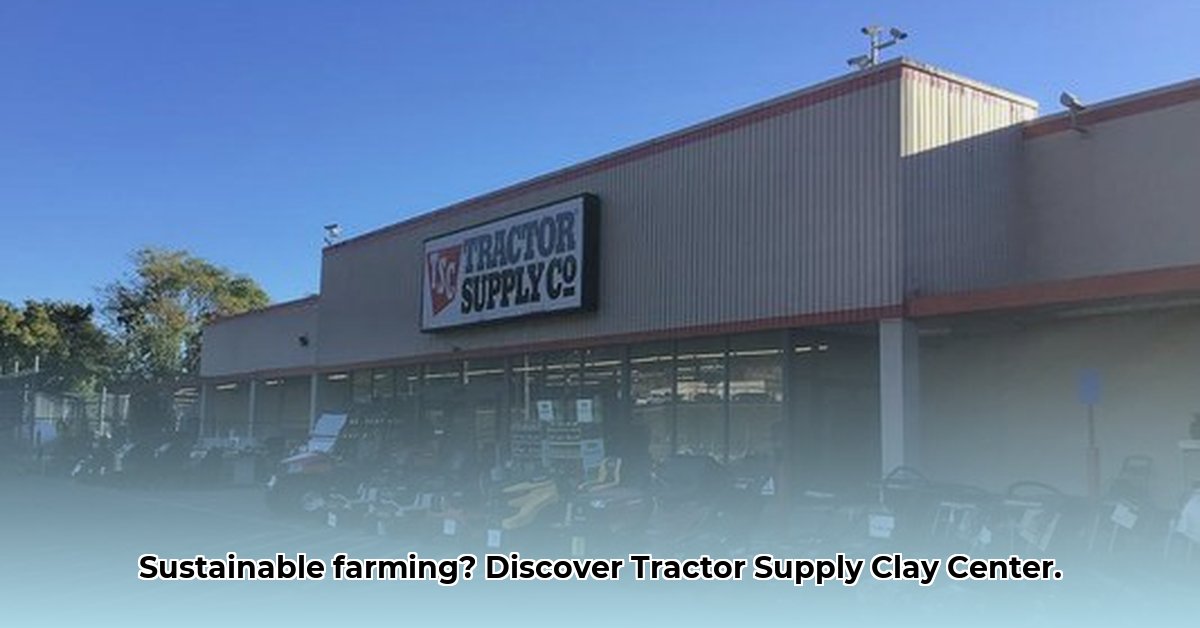
Tractor Supply Company (TSC) in Clay Center, Kansas, plays a significant role in the local agricultural landscape. Serving as a primary source for farming supplies, TSC's impact extends beyond simple commerce, influencing the sustainability of farming practices in the region. This article explores TSC's contribution to sustainable agriculture, highlighting both its strengths and areas for improvement. For more on modern farming equipment, see modern tractors.
TSC's Influence on Sustainable Farming in Clay Center
TSC's convenient location in Clay Center offers considerable benefits to the community. Easy access reduces travel time and fuel consumption for local farmers and gardeners, directly lowering their carbon footprint. This accessibility is a key strength, supporting both economic and environmental sustainability within the area. But how does TSC directly promote sustainable farming practices?
Product Availability: A Mixed Bag
TSC stocks a wide range of products, including organic seeds, compost, and water-saving irrigation systems – tools that directly support environmentally conscious farming. However, the store also offers conventional options, leaving the responsibility of sustainable choices primarily with the consumer. This highlights a crucial aspect: TSC's impact hinges on customer purchasing decisions. What percentage of TSC Clay Center's sales are truly sustainable products? That crucial data is currently unavailable.
The Need for Transparency and Data-Driven Assessments
A significant limitation is the lack of publicly available data regarding TSC's own environmental performance. Information on energy consumption, waste generation, and the overall carbon footprint of the store's operations remains elusive. Without transparent data, a comprehensive assessment of its overall sustainability contribution remains impossible. How can we truly gauge TSC's commitment to sustainability without knowing its own environmental impact? This lack of transparency hinders meaningful evaluation.
Toward a Greener Future: A Collaborative Approach
Improving sustainable farming practices in Clay Center necessitates a collaborative effort amongst various stakeholders. The following steps outline actionable strategies for TSC, farmers, consumers, and local authorities:
Actionable Steps for Tractor Supply Company:
- Implement Regular Sustainability Audits: Conduct regular assessments of energy usage, waste management, and supply chain emissions to establish a comprehensive baseline. (Efficacy: This provides quantifiable data for future improvements.)
- Publish Transparent Sustainability Reports: Publicly release annual reports detailing TSC's environmental performance, including key metrics and targets. (Efficacy: Increases accountability and builds trust with consumers.)
- Promote Sustainable Product Choices: Actively showcase and promote eco-friendly products through targeted marketing and in-store displays. (Efficacy: Directs consumer choices towards more sustainable options.)
- Foster Strategic Partnerships: Collaborate with local organizations focused on sustainable agriculture to share expertise and resources. (Efficacy: Leverages collective knowledge for greater impact.)
Actionable Steps for Farmers and Consumers:
- Make Conscious Purchasing Decisions: Prioritize organic seeds, water-efficient equipment, and eco-friendly pest control products when shopping at TSC. (Efficacy: Directly reduces environmental impact through consumer behavior change.)
- Demand Transparency: Actively inquire about TSC's sustainability practices and advocate for greater transparency in sourcing and supply chains. (Efficacy: Pressures TSC to improve its sustainability reporting and practices.)
- Adopt Sustainable Farming Techniques: Implement water conservation strategies, no-till farming, and responsible pesticide management on farms. (Efficacy: Improves soil health and reduces environmental burden.)
Actionable Steps for Local Government:
- Integrate TSC Resources into Local Programs: Leverage TSC's product offerings and expertise in local sustainability initiatives. (Efficacy: Creates synergistic partnerships for improved regional outcomes.)
- Incentivize Sustainable Farming Practices: Provide financial or technical support to local farmers adopting sustainable methods. (Efficacy: Encourages wider adoption of environmentally friendly practices.)
Actionable Steps for NGOs and Research Organizations:
- Conduct Independent Impact Assessments: Undertake research to quantify the environmental impact of retail businesses like TSC in rural areas. (Efficacy: Establishes a credible, data-driven understanding of TSC’s overall impact.)
- Collaborate with TSC on Data Collection: Partner with TSC to gather data and analyze its direct and indirect environmental impact. (Efficacy: Enables robust, verifiable analysis and facilitates evidence-based improvements.)
Addressing Key Sustainability Challenges at TSC
TSC faces several potential challenges in its sustainability journey. Addressing these issues proactively is paramount:
| Risk Factor | Potential Impact | Mitigation Strategies |
|---|---|---|
| Reliance on Fossil Fuels | High carbon emissions | Transition to renewable energy sources; optimize logistics, improve fuel efficiency of delivery vehicles. |
| Sales of Conventional Pesticides/Herbicides | Negative environmental impact | Promote organic alternatives; provide robust customer education programs on the impact of conventional pesticide use. |
| Water Resource Consumption | Depletion of local water resources | Promote water-efficient irrigation systems; partner with local water conservation groups. |
| Packaging Waste | Increased landfill waste | Transition to recycled and biodegradable packaging; implement robust recycling and compost programs. |
The journey towards sustainable agriculture is ongoing. Through collaborative efforts and a commitment to transparency, Tractor Supply Clay Center can play a meaningful role in fostering a more environmentally responsible farming community.
Embracing Pertanian Berkelanjutan for Clay Center's Future
While TSC's role is multifaceted, a deeper commitment to *pertanian berkelanjutan* (sustainable agriculture) is critical for the long-term health of the *komunitas petani lokal* (local farming community) in Clay Center. This includes actively championing practices that minimize environmental impact, such as promoting integrated pest management and water conservation techniques. By prioritizing soil health and biodiversity, TSC can contribute to a more resilient and productive agricultural landscape, safeguarding resources for generations to come. Furthermore, educating farmers and providing accessible resources are essential steps in fostering widespread adoption of sustainable methods.